Samsung's Galaxy XR has been making a strong case for enterprise adoption since Android Enterprise support landed earlier this year.
But the company's latest real-world deployment makes a different kind of argument – one built not on productivity dashboards or virtual meeting rooms, but on blood donation anxiety.
Samsung and global healthcare company Abbott partnered with the Korean Red Cross to run Korea's first XR-powered blood donation campaign at Samsung Digital City in Suwon.
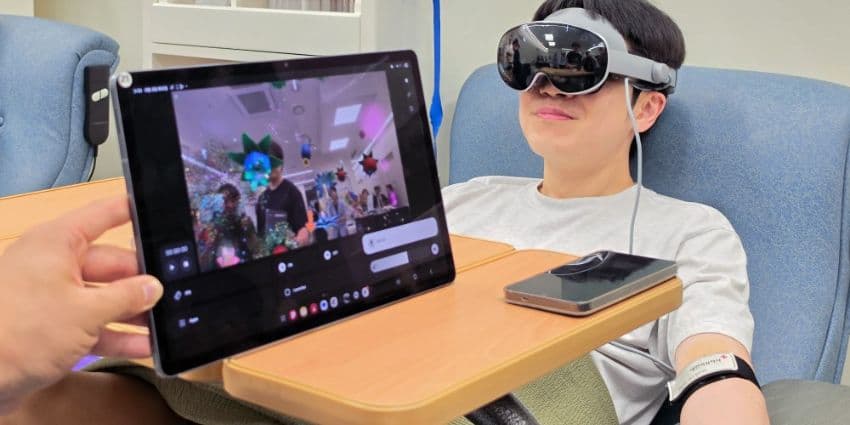
In recognition of World Blood Donor Day, Samsung employees donated blood while wearing Galaxy XR headsets, replacing the usual clinical ceiling-staring with immersive meditation content.
The experience is deliberately low-friction. Donors enter a Zen garden-inspired virtual environment and interact entirely through gaze – no controllers, no hand gestures.
Over three to five minutes, they plant virtual flower seeds simply by looking at them, watching flowers and trees bloom to a soundtrack created in collaboration with the Chicago Symphony Orchestra. The intent is straightforward: distraction and calm in equal measure.
"Blood donation may not be the first use case that comes to mind for XR," Daniel Seung Lee, Global Head of B2B Wearable & XR PM, Samsung posted on LinkedIn.
"[This] demonstrates how immersive technology can create meaningful social impact beyond productivity and entertainment. Donors experience a calming XR environment during the donation process, helping transform anxiety into engagement."
Why Healthcare Is the Right Proving Ground
For enterprise XR, healthcare settings present a specific and telling challenge.
Devices need to work in environments where hygiene, supervision, and simplicity aren't optional – they're baseline requirements. Galaxy XR clears those bars in ways that matter to the people running these programmes.
"Samsung Galaxy XR, powered by Android XR, represents a significant advancement for our mixed reality blood donation program," said Miguel Carrazza of Abbott's Transfusion Medicine division.
"It is well-suited for healthcare settings, allowing medical staff to monitor donors more easily while helping them stay naturally engaged."
That last point is worth unpacking. One of the persistent criticisms of immersive headsets in professional environments is that they isolate the user from their surroundings – a problem if you're a nurse who needs to check a line or respond quickly.
Galaxy XR's design and the Android XR platform apparently address this, keeping donors present enough to be monitored while still benefiting from the immersive content.
It's a practical detail, but it's exactly the kind of thing that determines whether enterprise deployments actually stick.