Few things are more important in a fast-paced non-profit environment than keeping teams properly connected. The correct flow of knowledge in a non-profit organisation allows for access to more creative fundraising ideas, better productivity, and enhanced outcomes on a low budget.
In recent years, keeping highly distributed teams in the non-profit sector connected has required a greater focus on and investment in cloud-based technologies. This is something the World Wide Fund for Nature (WWF) discovered when looking for new ways to mobilise and enhance its workforce.
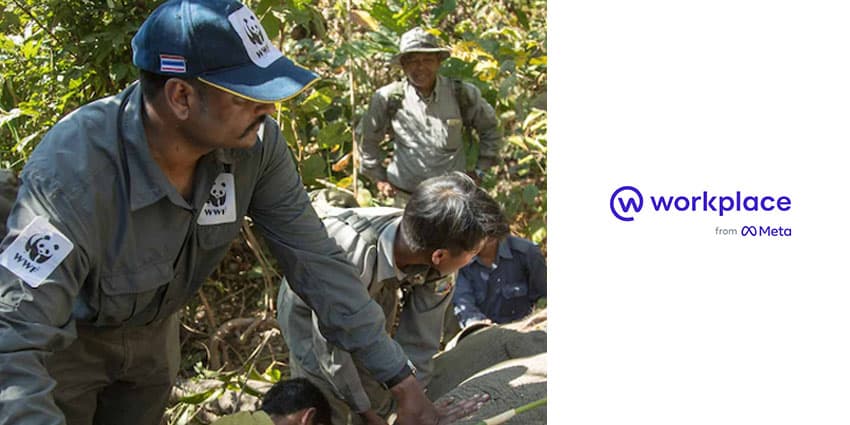
With a presence in more than 100 countries and over 6,800 employees, WWF needed access to a flexible and reliable solution for best-in-breed collaboration. Eventually, the company decided to choose Workplace from Meta as its new work hub.
Here’s how Meta and WWF worked together.
Building a New Communication Ecosystem
WWF’s global presence is powered by a host of national offices, each responsible for championing the campaigns relevant to WWF within the region. These national offices are connected to the WWF International ecosystem, offering global coordination and support in areas like wildlife, oceans, forests, energy, climate, freshwater, finance, food, markets, and governance.
Prior to leveraging their new collaboration solution with Workplace from Facebook, the national offices managed by WWF were extremely siloed, with limited visibility into the activities taking place around the globe.
The best-of-breed collaboration tools offered by Workplace have helped to bring various teams and offices together in the same aligned ecosystem, allowing for a better way of working together. According to WWF, Meta’s Workplace technology has helped to build a more unified and powerful global community, equipped to make a larger impact on environmental conservation efforts.
Paolo Mangahas, the Network Communications Officer for WWF says Workplace has assisted in building a more informal culture of information sharing, where everyone can share ideas and updates quickly. The result is an environment where great content can become more “open-sourced” and adaptable. Additionally, there’s even a window where people can connect and build closer personal relationships, so work feels a little more “human”.
Driving Incredible Results with Collaboration
WWF’s communication team reported a 200% increase in engagement within the annual conference for the group in 2018, thanks to the use of Workplace technology. The company has also noted that 100% of its team members can now participate in annual conferences with live video.
The World Wide Fund is made up of a huge selection of environmental specialists and passionate conservationists, all working together to achieve incredible outcomes for the betterment of the planet. Implementing tools like Workforce has allowed the team to identify experts more easily within the internal community, which boosts problem-solving capabilities and collaboration in the teams.
National offices can now share regular updates about what’s going on in their environment, which other offices can learn and take inspiration from. This means WWF is building a more collaborative environment, where information can flow more freely throughout the landscape, without the threat of duplicated work or restricted innovation.
A globally connected economy where work can be shared openly across News feeds and groups have allowed WWF to build a new philosophy known as “#TogetherPossible”, which is all about the power and potential of the collective. A space for open collaboration means teams can listen to each other more effectively and innovate more often.