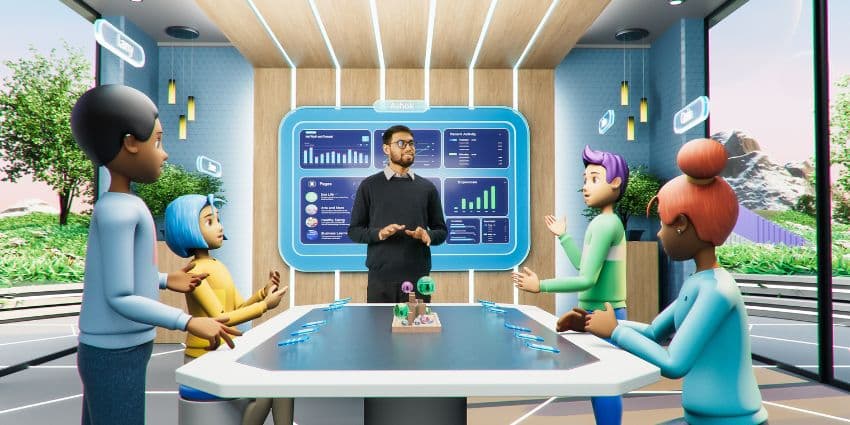
Meta Platforms is winding down a key part of its once‑ambitious metaverse strategy.
The social virtual reality world Horizon Worlds – once a centerpiece of founder Mark Zuckerberg’s bet on the next era of computing – will no longer be accessible on Meta Quest VR headsets after June 15, 2026.
The company is pushing users toward the mobile version of the app instead, acknowledging that Horizon’s future lies on screens people already use every day.
In a notice to users, the company said that from June 15 people "will no longer be able to build, publish or update VR worlds. In addition, you will no longer be able to access Meta Horizon Worlds on Meta Quest headsets. After this date, you can continue to enjoy worlds on the Meta Horizon mobile app.
"This change is part of our focus on mobile development, bringing new experiences to even more people. Your Meta Quest headset and other VR apps are unaffected by this change."
VR Sunset and Mobile Migration
Meta has outlined a phased removal of Horizon Worlds from VR platforms.
Starting March 31, 2026, individual Horizon Worlds and events will be removed from the Meta Quest Store, and users will no longer find popular virtual spaces such as Horizon Central, Events Arena, Kaiju, and Bobber Bay in VR storefront listings.
By June 15, 2026, the full VR experience will cease, and the app will be removed from Quest headsets.
After this date, the easiest way to access Horizon Worlds will be through the Meta Horizon mobile app on iOS and Android, though without any VR component.
This change also affects Hyperscape Capture, a feature that let Quest users capture and share detailed 3D scans of real-world environments.
Sharing and co‑experiencing these Hyperscapes will no longer be supported, though users will still be able to capture and view them individually.
From Flagship VR World to Mobile Pivot
When Horizon Worlds first launched, it was intended as Meta’s flagship metaverse product: a virtual space where people could socialize, create, play, and explore together in VR.
The platform debuted in late 2021 and later added mobile support, but it never achieved widespread adoption.
Despite billions of dollars invested and high-profile tie-ins like music performances and brand partnerships, Horizon Worlds struggled to attract a consistently large user base.
Early technical limitations, including awkward locomotion and avatar design, contributed to its rocky start.
Even with updates, many users found the platform less engaging than smaller social VR services that offered more dynamic interaction and events.
What Meta Says
Meta has framed the move to discontinue Horizon Worlds in VR as a strategic refocusing rather than a retreat from immersive technology.
Executives have emphasised that this shift allows the company to concentrate on mobile development while continuing to invest in VR technology over the long term.