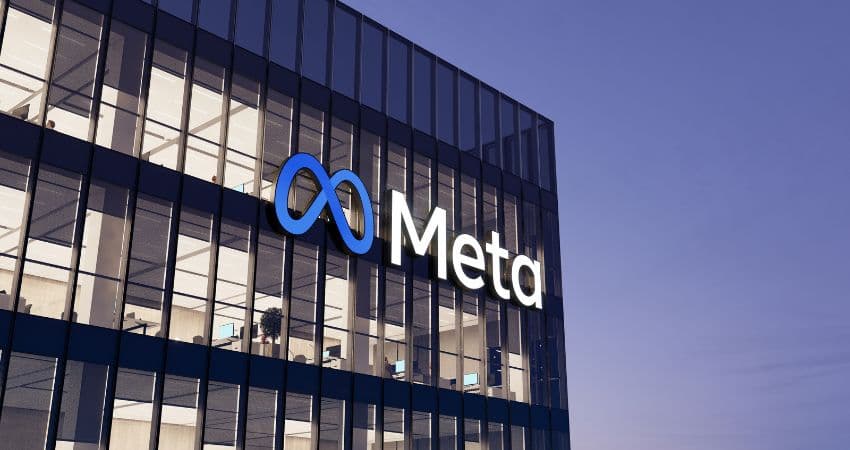
Employee engagement is often discussed as a culture and wellbeing challenge. But the Meta mouse-tracking story shows it is also a trust and governance challenge, especially when workplace monitoring is framed as “productivity” while employees experience it as surveillance. Meta employees are organizing against corporate software that tracks keystrokes, mouse activity, and in some cases screen data as part of efforts to train AI models.
One employee explained their frustration:
“Selfishly, I don't want my screen scraped because it feels like an invasion of my privacy. But zooming out, I don't want to live in a world where humans—employees or otherwise—are exploited for their training data.”
For leaders focused on employee wellbeing, the most important lesson is not whether monitoring tools are legal. It is whether they are compatible with a healthy engagement strategy. Engagement depends on psychological safety, autonomy, and a belief that performance will be judged fairly. Surveillance-heavy programmes, especially those linked to AI initiatives, can quickly undermine all three.
Related Articles
Meta employees distributed flyers across multiple US offices urging coworkers to sign a petition against the installation of mouse-tracking software on company computers. The flyers carried a pointed message.
“Don't want to work at the Employee Data Extraction Factory?”
Internally, there has been a petition that demands an end to what Meta calls the “Model Capability Initiative,” a tool installed on US employee laptops. The stated goal is to capture real examples of how people use computers so Meta can build AI agents that can navigate software more effectively.
Meta’s rationale is explicit about the training objective.
“If we're building agents to help people complete everyday tasks using computers, our models need real examples of how people actually use them — things like mouse movements, clicking buttons, and navigating dropdown menus.”
Meta told workers the tool would log activity on Meta computers and internal apps to be used as training data, with the company adding: “The data is not used for any other purpose,” and claiming safeguards to protect sensitive content.
“The data is not used for any other purpose.”
Why This Is an Employee Engagement and Wellbeing Story
Employee engagement breaks when people feel watched, replaceable, or disrespected. The Meta backlash lands in a period where workers are already sensitive to perceived instability. Reuters noted the pamphlet distribution came about a week before Meta is set to lay off 10% of its workforce. The tracking programme has also been described as a key driver of low morale and a factor behind labor-organizing momentum in the UK.
From a wellbeing perspective, this is a predictable stress cocktail: uncertainty, reduced control, and the feeling that day-to-day work is being converted into something the employee did not agree to provide. Even if a company believes it is collecting “usage signals,” employees may experience it as personal extraction. That gap in interpretation is where trust collapses.
It also creates a second-order engagement issue: self-censorship. When employees believe every click and keystroke is monitored, they change behaviour. They avoid experimentation, reduce informal learning and they may stop asking “stupid questions” that produce smart outcomes. In knowledge work, that is not a minor cultural problem. It is a productivity and innovation risk.
The Practical Lesson for Employers
This story is a warning to any organisation rolling out monitoring tooling, especially when AI is involved. Even if monitoring is deployed for a legitimate reason, employee engagement depends on four operational choices:
- Consent and clarity: explain what is collected, why, and what it will never be used for.
- Proportionality: collect the minimum necessary data, not the maximum possible.
- Governance: document retention, access controls, auditability, and review processes.
- Wellbeing design: treat surveillance as a trust risk that requires mitigation, not a default “efficiency lever.”
Employee engagement does not collapse because people dislike change. It collapses when employees believe the organisation is changing the rules without them, while asking them to remain loyal anyway.
Read More Workplace Technology and Employee Experience Coverage
FAQs
Why does workplace surveillance impact employee engagement?
Surveillance can reduce autonomy and psychological safety, increasing stress and decreasing trust. Engagement drops when employees feel watched instead of supported.
What is Meta’s Model Capability Initiative?
It is a tool Meta has used to log employee activity such as mouse movements and clicks to help train AI systems.
Is employee monitoring always bad for wellbeing?
Not always. Monitoring for security or safety can be legitimate, but it must be transparent, proportionate, and governed. Overreach can quickly erode trust and morale.
How can employers introduce monitoring without harming trust?
Use clear communication, collect minimal data, define strict governance and retention rules, and separate monitoring from punitive performance management where possible.
What should leaders ask before deploying tracking software?
Leaders should ask what problem they are solving, whether the data is essential, how it will be protected, and how they will protect employee trust and wellbeing.