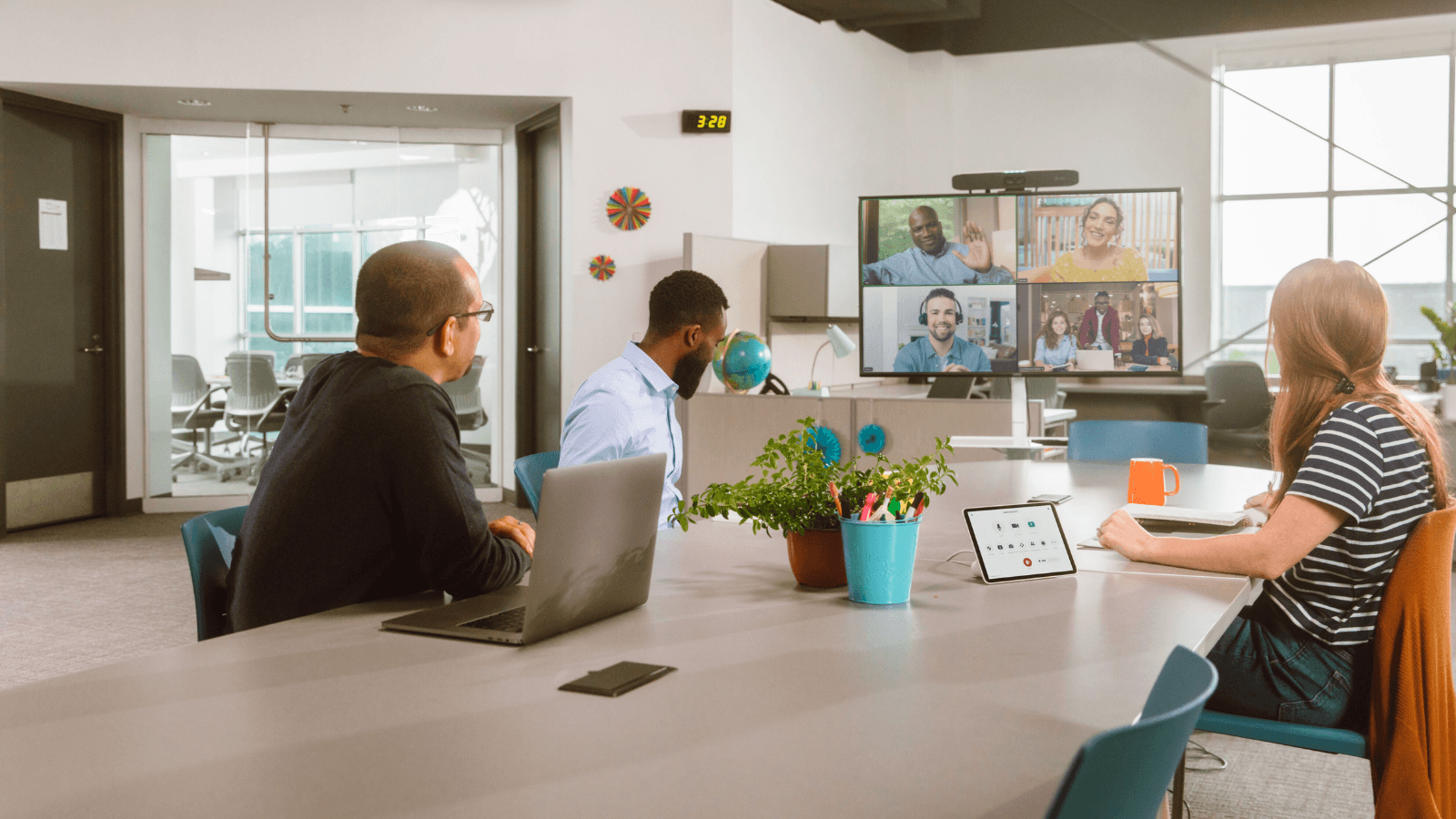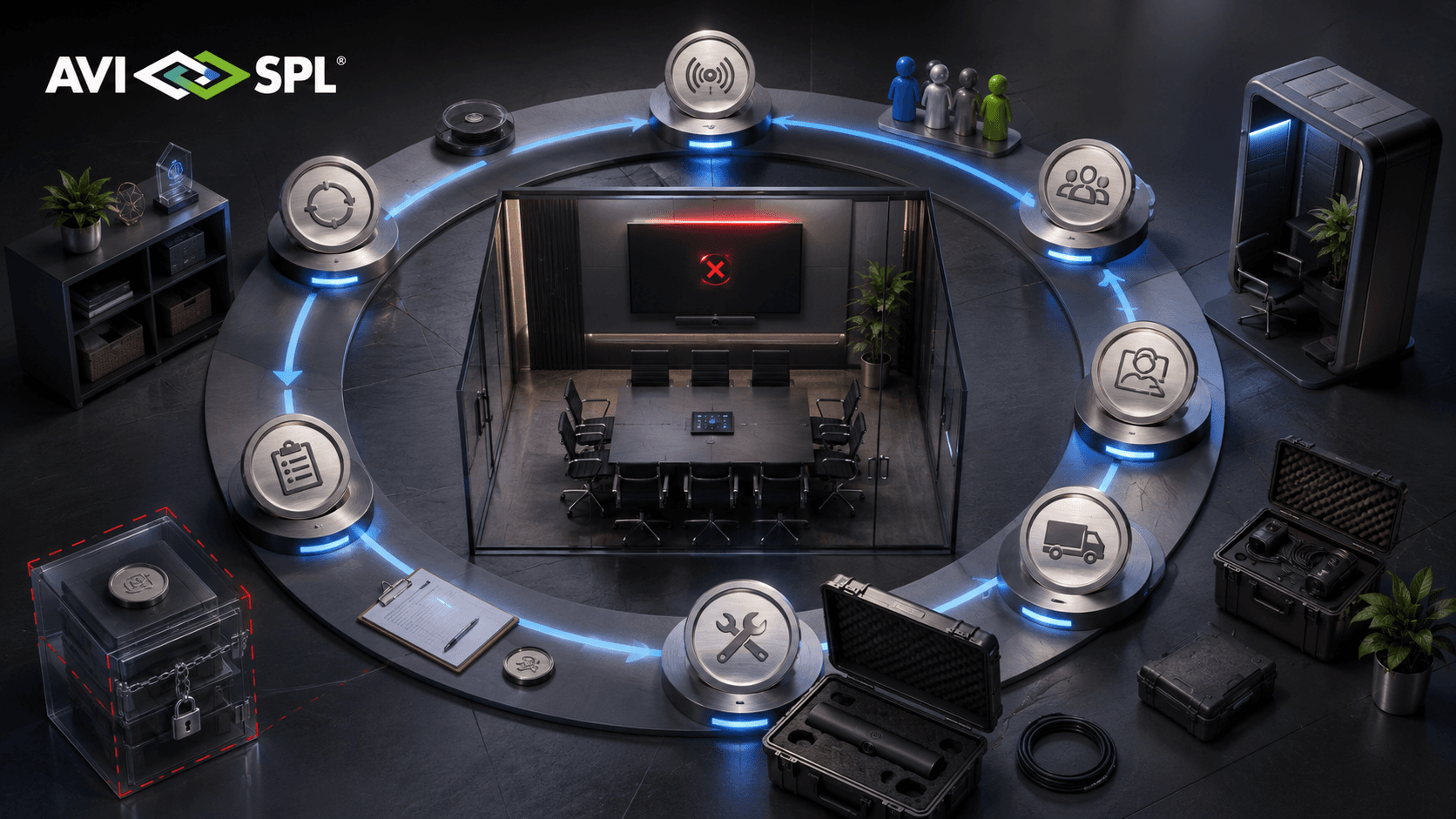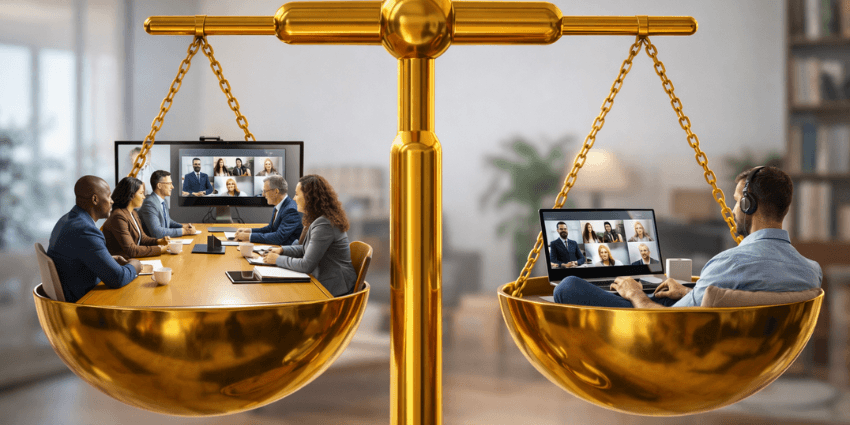
Meeting equity means every participant can see, hear, and contribute equally - regardless of where they are located. In hybrid work environments, that equity is no longer guaranteed by default.
Without the right audio-visual (AV) systems, hybrid meetings often reinforce proximity bias, favouring those in the room over those joining remotely. Modern enterprise AV systems are designed to correct that imbalance, turning meeting rooms into inclusive collaboration spaces rather than silent barriers to participation.
This article explains how AV systems enable meeting equity, which technologies matter most in 2026, and how enterprise buyers should evaluate ROI before investing.
Suggested articles:
Five Proven Workspace Technology Use Cases That Deliver ROI
Which Workspace Tech Is Worth Buying in 2026?
The 2026 Hybrid Hardware Checklist for Modern Collaboration
What Is a Modern AV System - and Why Does It Matter for Equity?
A modern AV system is an integrated collaboration environment, not a collection of devices.
For meeting equity, AV systems must ensure that remote participants are as visible, audible, and influential as in-room attendees. That requires coordination between hardware, software, and room design.
At an enterprise level, this typically includes:
- Intelligent cameras that frame speakers automatically
- Beamforming microphones that capture voices evenly
- Displays that balance content and participant visibility
- Unified controls for one-touch meeting join
- Native integration with platforms such as Microsoft Teams Rooms, Zoom Rooms, and Webex
When these elements work together, meetings become location-neutral, supporting inclusive participation rather than privileging physical presence. Read more on meeting equity and exclusivity here.
How AV Systems Work in Practice
AV systems support meeting equity by removing friction and bias from how meetings operate.
Capturing Voices and Faces Equally
Beamforming microphones dynamically focus on active speakers, while AI-enabled cameras adjust framing in real time. This prevents remote participants from missing side conversations or non-verbal cues - a common source of disengagement.
Synchronising Audio, Video, and Content
Dual-screen or multi-display setups separate shared content from participant video. This ensures that remote attendees remain visible throughout the meeting, rather than disappearing when slides are shared.
Reducing Technical Friction
One-touch join, calendar integration, and consistent room layouts reduce delays and confusion. When meetings start smoothly, remote employees are less likely to feel like second-class participants.
Supporting Multiple Collaboration Platforms
Platform-agnostic rooms allow Teams, Zoom, and Webex users to join without adapters or workarounds. This flexibility is critical in multi-vendor enterprise environments.
Enterprise Case Example: ISG’s Hybrid Room Standardisation
ISG, a UK-based construction and services firm, faced inconsistent hybrid meeting experiences across its offices.
By deploying standardised AV rooms with Crestron control and Microsoft Teams Rooms, ISG achieved:
- Consistent user experience across locations
- Faster meeting start times
- Reduced support requests from end users
21st Century AV turned our vision into reality, guiding us through each step and delivering a high-performance solution on time and within budget
For ISG, meeting equity was achieved not through advanced features alone, but through standardisation and usability at scale.
Enterprise Case Example: How Berry Global Implemented AV to Improve Hybrid Meeting Equity
Berry Global, a Fortune 500 manufacturing company, modernised its meeting rooms to support hybrid work by installing standardised audio-visual (AV) systems across its offices.