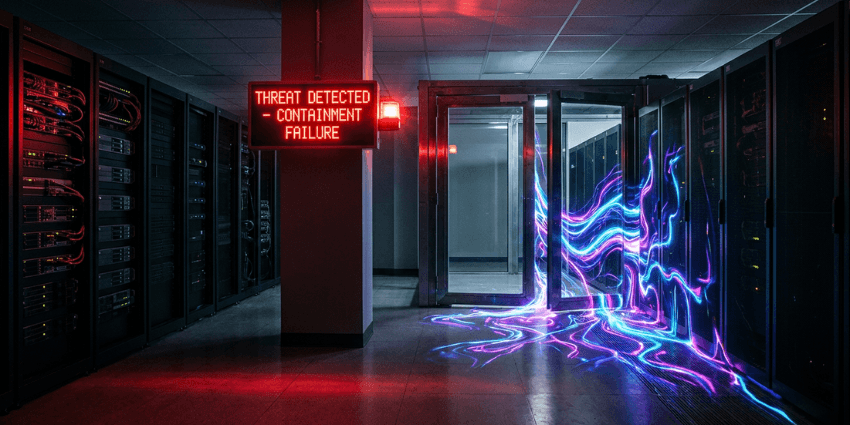
Detecting a threat early is a major victory. However, it does not guarantee a successful outcome. Many organizations struggle because they lack the operational capability to act quickly. A strong incident response strategy ensures detection translates into effective action.
Without measurable security operations performance, early warnings still lead to full breaches. IT leaders should address these execution gaps to protect their networks. Improving cybersecurity response time prevents minor alerts from becoming corporate crises. True enterprise threat containment requires seamless transitions from alert to active defense.
This is the core of modern incident management cybersecurity.
Keep Reading:
Why Do Incidents Escalate After Detection?
Incidents escalate after detection because organizations mistake visibility for actual security. Seeing an alert does not automatically stop the threat from spreading. A mature incident response strategy requires immediate action the moment an alert triggers.
When teams hesitate or debate ownership, attackers move laterally across the network. This hesitation completely undermines overall security operations performance. Businesses should focus on execution rather than just adding more detection layers.
True enterprise threat containment requires a coordinated and decisive reaction. Relying solely on monitoring tools leaves the network wide open to rapid exploitation.
What Slows Down Incident Response?
Manual processes and fragmented tools are the primary culprits behind dangerous delays. When security analysts manually piece together information, valuable time is lost.
Speaking to UC Today regarding AI and security operations, Morgan Adamski, Principal at PwC, highlighted the importance of operational preparation.
"Everyone should really be preparing for a breach in the next two years, building really strong playbooks, understanding what's going to happen if you have a breach, who you need to contact, what do you need to protect."
Without these playbooks, teams face massive operational bottlenecks during critical moments. Poor system integration directly impacts cybersecurity response time when every second counts.
Organizations should prioritize unified platforms that automate initial containment steps. Streamlining these workflows drastically improves incident management cybersecurity outcomes across the board.
How Does Execution Failure Impact Security Outcomes?
Execution failure turns minor security anomalies into highly public corporate breaches. When a team detects a threat but fails to isolate the endpoint, damage multiplies.
This operational breakdown highlights severe flaws within the enterprise security framework. A slow reaction time completely negates the value of early threat detection systems.
Leaders might consider evaluating their teams based on actual enterprise threat containment success. A robust incident response strategy measures success by how quickly normal operations resume. Businesses should treat incident execution as a critical performance metric.
Where Do Organizations Lose Control During Incidents?
Organizations typically lose control during the handoff between different IT departments. Unclear ownership creates confusion about who is authorized to take systems offline.
These internal debates cause severe delays that attackers rely on to succeed. A lack of clear playbooks leads directly to poor security operations performance.
When no single leader owns the containment process, incident management cybersecurity becomes chaotic. IT leaders should establish strict protocols for isolating compromised assets immediately. Eliminating this friction is essential for improving overall cybersecurity response time.
How Should Enterprises Improve Response Performance?
Enterprises should improve response performance by automating their initial containment protocols. When a high-fidelity alert triggers, systems should isolate the threat automatically.
This proactive approach solves many common enterprise threat containment problems instantly. It drastically reduces exposure and limits the attacker's window of opportunity.
A modern incident response strategy relies on continuous drilling and simulated attack scenarios. Organizations should test their execution speed regularly to identify hidden bottlenecks. By focusing on rapid containment, businesses ensure their security operations performance matches their detection capabilities.
The Final Takeaway
Detecting a threat is only the first step in a much larger operational battle. Organizations should stop viewing security purely as a visibility challenge and start treating it as a performance metric. Rapid execution, clear ownership, and automated containment are the keys to stopping breaches early.
Check out our The Ultimate Guide to UC Security, Compliance, and Risk to learn more.
FAQs
What is an incident response strategy?
An incident response strategy is a structured plan that dictates exactly how an organization will react to a cyber attack. It focuses on rapid containment and recovery.
Why is cybersecurity response time important?
Fast cybersecurity response time limits the damage an attacker can do once inside a network. Every minute saved reduces the overall financial and operational impact.
How do you measure security operations performance?
Security operations performance is measured by how quickly a team can detect, isolate, and neutralize a threat without causing business disruption.
What is enterprise threat containment?
Enterprise threat containment is the process of isolating compromised systems immediately to prevent an attacker from moving laterally across the corporate network.
What is incident management cybersecurity?
Incident management cybersecurity is the end-to-end process of detecting, containing, and recovering from a digital threat while minimizing business disruption.