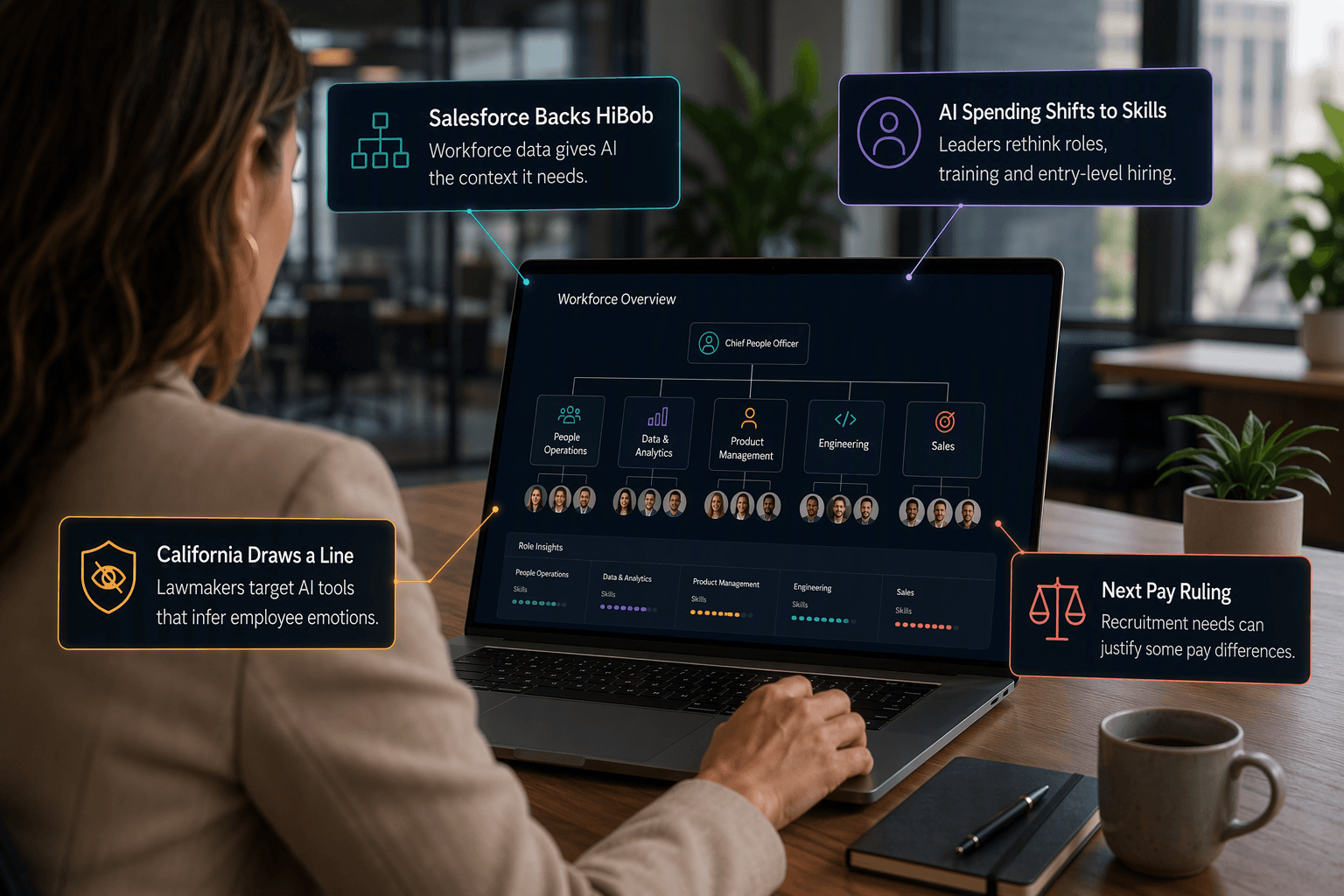
If your HR tech stack feels like a messy drawer of apps, you’re not alone. The good news is that the question how do HCM platforms work isn’t complicated once you stop treating it like an HR software issue and start treating it like a connected workplace system.
At a high level, human capital management (HCM) platforms pull core employee data and the entire talent lifecycle into one operational layer. That includes recruitment, onboarding, payroll and benefits, learning, performance, scheduling, analytics, and workforce planning. When those pieces share data and workflows, HR stops being a set of disconnected tasks. It becomes a system leaders can run, measure, and improve.
For UC Today readers, this matters because HCM increasingly overlaps with workplace management and unified communications. Onboarding, learning, manager coaching, and employee self-service are moving into the flow of work. In practice, that often means collaboration tools become the front door to HCM, even when the core platform sits elsewhere.
Read more:
- AI and Automation in Human Capital Management
- The Impact of Predictive People Analytics
- Unified HCM vs Multi-Platform HR
What Is an HCM Platform?
An HCM platform is software designed to support the full employee lifecycle, from hiring to retirement. The easiest way to understand it is this: an HCM platform is where employee data becomes workflows. Instead of teams copying information between tools, the platform links processes together so work can move forward without constant manual handoffs.
Most modern platforms cover core HR (your system of record), plus talent processes like recruiting and onboarding, operational processes like payroll and scheduling, and strategic capabilities like analytics and planning. They also include governance controls so organisations can manage permissions, privacy, compliance, and increasingly AI oversight.
In plain terms, HCM platforms don’t just store workforce information. They turn workforce information into repeatable, auditable processes.
HCM vs HRIS vs HRMS: What’s the Difference?
Buying teams often get stuck on labels. However, the practical difference comes down to scope.
An HRIS is usually the system of record: employee data, job details, policies, organisational structure, and basic HR processes. An HRMS typically extends that into more day-to-day HR operations such as benefits administration, time tracking, and payroll connections. HCM generally goes broader again, connecting the talent lifecycle (recruiting, onboarding, learning, performance, skills) to analytics, workforce planning, and governance.
Here’s a clean rule of thumb: HRIS tells you who your workforce is. HRMS helps you run HR operations. HCM helps you build and improve workforce capability over time.
What Does 'Workforce Platform' Mean in HCM Buying?
In HCM buying conversations, workforce platform usually means one of two things. Sometimes it refers to a unified suite that runs the whole employee lifecycle with shared data and workflows. Other times it refers to deep workforce management capability—time, attendance, scheduling, and labour planning.
This distinction matters because time and scheduling data can turn HCM from HR reporting into operational planning. In sectors such as retail, healthcare, manufacturing, logistics, and contact centres, labour decisions are business decisions. A workforce platform that can model overtime, absences, rota changes, and coverage risk helps leaders plan with fewer assumptions. For a practical explanation, UKG outlines how workforce management supports scheduling and time needs at scale.
How Do HCM Platforms Work Behind the Scenes?
Most modern human capital management platforms follow the same basic structure. They start with a shared data foundation, layer workflows on top, and then surface insights that leaders can act on.
First, there’s a shared people data layer. This is the system’s source of truth for identity, job role, team, location, policy, and permissions. It’s also where access control and audit rules live. If the data layer is weak, everything built on top becomes unreliable.
Next, there’s workflow automation across the talent lifecycle. This is where HCM stops being a database and starts being operational. A new role can trigger approvals, a requisition, onboarding tasks, access requests, and role-based training. A promotion can automatically update reporting lines, compensation cycles, and compliance steps. The value is not the workflow itself—it’s the reduction in manual coordination across teams.
Then, modules share context so processes connect. When recruiting hands off cleanly into onboarding, and onboarding flows into learning, and learning feeds internal mobility, the employee lifecycle becomes less fragmented. That’s when you stop hearing “which system is right?” and start seeing consistent data and predictable outcomes.
Finally, analytics and planning turn activity into insight. Instead of just reporting what happened, the platform should help leaders see patterns and make better decisions—headcount trends, turnover drivers, skills gaps, readiness risk, and staffing forecasts. This is where HCM becomes a business tool rather than an HR tool.
Even the most unified suites still integrate with other systems. That includes finance, identity, collaboration, and specialist tools. Therefore, when you evaluate vendors, ask which integrations are native, which rely on partners, and which require custom work to stay stable.
Where Does AI Fit Into HCM Platforms?
AI in HCM isn’t one feature. It’s a layer that can touch recruiting, skills, learning, mobility, workforce forecasting, and HR service delivery. The most important buyer test is simple: will people actually use it inside real workflows? According to Sapient Insights,
"AI needs to be embedded in processes to be successful in the workplace.”
If AI lives outside manager routines, adoption drops fast. In contrast, AI that shows up where managers already work—hiring decisions, coaching moments, learning assignments, and employee self-service—has a much better chance of sticking.
In 2026, most vendor AI stories cluster around a few practical areas. Skills intelligence is one. That’s why major platforms have invested in skills layers such as Workday Skills Cloud and Oracle Dynamic Skills. Explainability is another, because buyers want to know why a system recommended a candidate, course, or career move. Workday has talked publicly about explainable AI in its messaging, which is useful when enterprise governance teams ask how does the system decide? IBM also has research often used as a reference point for predictive workforce analytics discussions.