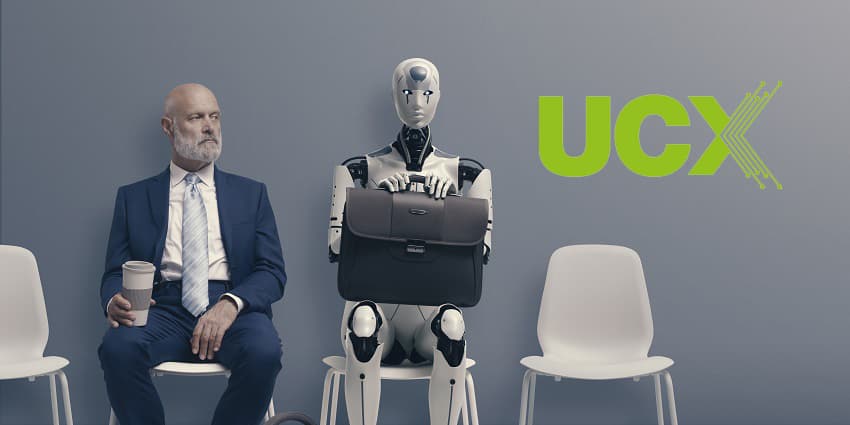
Widely discussed for decades, advancements in the field of generative technology made earlier this year have thrust AI firmly into the zeitgeist.
As of May 2023, a quarter of US companies had adopted AI technology in some form, and a further 43% are exploring its potential applications, according to a study by Forbes.
From healthcare to banking, manufacturing and government, virtually no sector will be untouched by the rise of these technologies. Its adoption is set to have a profound impact not just on the services offered by companies and organisations, but also on the way they connect with employees.
In a recent interview, Jon Arnold, an analyst focusing on the business-level impact of disruptive communications technologies, discussed the growing impact of AI on the employee experience (EX).
Building on strong foundations
For Arnold, the onset of AI, particularly in the EX space, was largely made possible by the shift towards remote working during the pandemic.
“AI wouldn’t be having this big moment if it wasn’t for the trend that came before it, which was the Cloud,” notes Arnold.
“The Cloud is the foundation that’s made all of this possible, and as it matured over the past three years or so thanks to remote work it has really become the dominant platform for real-time communications.”
AI as an enabler
While individuals will always have their own unique traits, Arnold believes that the surge in communications taking place via the Cloud has given AI the tools it needs to predict behaviour at scale.
Backed by a growing set of data to mine from, AI technologies could be set to transform aspects of the everyday employee experience in areas such as transcribing and administration.
Arnold explains that: “Advancements in speech recognition technology, for example, will greatly reduce the time spent on mundane tasks such as taking notes during a call.”