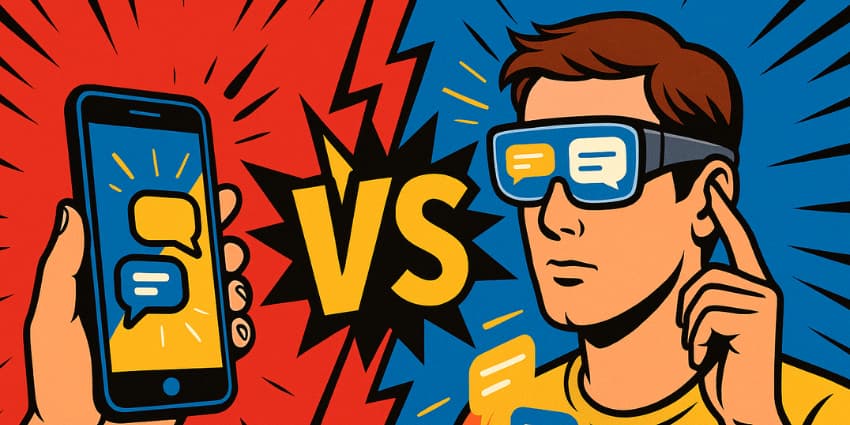
As someone deeply immersed in the evolution of workplace technology, I believe we're witnessing a pivotal moment in computing history. The traditional smartphone, our trusted digital companion for over a decade, faces its first serious challenger for primary screen dominance.
If you're an enterprise leader or technology professional evaluating the next wave of productivity tools, the emergence of AI-powered smart glasses represents more than an incremental upgrade. This shift could fundamentally reshape how employees access information, collaborate, and perform daily tasks.
The Current Smartphone Paradigm in Professional Settings
Smartphones have dominated professional workflows since the iPhone's 2007 debut, evolving into pocket-sized computers that manage everything from emails to enterprise applications. Today's workplace relies heavily on mobile devices for communication, data access, and productivity apps. However, this dominance comes with inherent limitations that forward-thinking organizations are beginning to question.
The smartphone requires constant attention shifting between the physical environment and the digital screen. Workers frequently interrupt tasks to check notifications, respond to messages, or access critical information. This context-switching creates productivity friction that many enterprises are eager to eliminate.
AI Smart Glasses: A New Computing Paradigm
AI-powered smart glasses, exemplified by devices like the Meta Ray-Ban smart glasses and emerging enterprise solutions from companies like Vuzix and RealWear, offer a fundamentally different approach to workplace computing. These devices overlay digital information directly onto the user's field of vision, enabling seamless integration between physical and digital environments.
Unlike smartphones that demand visual attention, smart glasses deliver contextual information without disrupting the user's primary focus. An engineer inspecting equipment can access technical manuals, receive real-time guidance, and communicate with remote experts while maintaining visual contact with their work environment.
User Experience Comparison: Hands-Free vs. Hand-Held
The user experience differences between AI smart glasses and smartphones in professional settings are substantial. Smart glasses eliminate the need to physically retrieve, unlock, and navigate a device. Voice commands and gesture controls enable natural interactions that feel more intuitive than traditional touch interfaces.
"Smart glasses provide information exactly when and where you need it, without the cognitive overhead of switching between physical and digital contexts." - Enterprise Technology Research Analyst
Field workers particularly benefit from this hands-free approach. Technicians can access step-by-step repair procedures while using both hands for complex tasks. Warehouse employees can receive picking instructions and inventory updates without consulting handheld devices. Healthcare professionals can review patient information while maintaining direct patient interaction.
The smartphone's strength lies in its versatility and established ecosystem. Enterprise applications, communication platforms, and productivity tools have matured over years of mobile-first development. However, this same strength becomes a limitation when constant device interaction disrupts workflow efficiency.
Workplace Scenarios Where Smart Glasses Excel
Manufacturing and Field Service
Manufacturing environments showcase smart glasses' transformative potential. Assembly line workers can receive real-time quality control feedback, access digital work instructions, and communicate with supervisors without interrupting their physical tasks. This seamless information delivery reduces errors and increases productivity while maintaining safety protocols.
Field service technicians benefit enormously from hands-free access to technical documentation, remote expert assistance, and augmented reality overlays that highlight equipment components. Companies like Microsoft have documented significant efficiency improvements when technicians use mixed reality devices for complex repairs.
Knowledge Work and Collaboration
Knowledge workers are discovering smart glasses' potential for enhanced focus and reduced distraction. Notifications, calendar updates, and communication alerts can be delivered contextually without the visual disruption of checking a smartphone. Video conferences can occur naturally while reviewing physical documents or engaging in face-to-face conversations.