AI has moved from HR’s horizon to its heartbeat. For enterprises navigating hybrid work, talent scarcity, and rising expectations for personalisation, AI and automation in human capital management (HCM) have become strategic pivots — transforming how organisations understand, support, and enable their people.
Modern HCM is no longer just about records and reporting. The shift is toward predictive people intelligence: using data to anticipate workforce risks, identify skills gaps early, and improve employee experience at scale.
From Administration to Anticipation
A decade ago, HR systems were built to record events: who joined, who left, and what they earned. Today’s HCM platforms increasingly use AI to shift HR from administration to anticipation.
These models analyse workforce signals such as performance, engagement, and (in some cases) sentiment to forecast:
- Flight risk (who may be likely to leave)
- Skills shortages (where capability gaps are emerging)
- Intervention opportunities (what actions may reduce churn and improve performance)
HR analyst Nadeem Khan emphasises the importance of analytics and automation in human capital management:
“HR will not be replaced by data analytics, but HR who do not use data and analytics will be replaced by those who do.”
In practice, vendors are leaning into skills and risk modelling. For example, Workday has positioned skills intelligence as a core layer for understanding workforce capability, while Oracle Cloud HCM promotes AI-driven insights for workforce planning and retention. The value is simple: predictive insight can reduce recruitment cost, protect institutional knowledge, and support healthier workforce decisions.
Josh Bersin frames the shift bluntly:
“AI must be applied to HR to ensure organizations and employees remain competitive and productive.”
Automating the Mundane, Elevating the Meaningful
AI’s biggest gift to HR is time. By automating routine processes — onboarding, payroll, compliance, scheduling, and employee changes — HR teams can spend less energy on bureaucracy and more on strategy, culture, and capability.
Automation now runs through the employee lifecycle. A new hire can experience a smoother onboarding journey (contract signing, equipment provisioning, access requests, and training recommendations) triggered by workflow logic — while still feeling personally supported.
Platforms like SAP SuccessFactors position automation as cross-department orchestration: when an employee changes role, workflows can trigger updates to compensation, reporting lines, access permissions, and learning requirements. The outcome is faster execution, better accuracy, lower compliance risk, and stronger employee experience.
Personalising Employee Experience at Scale
The next frontier of workforce AI is personalisation. Employees increasingly expect tailored digital experiences at work — similar to consumer platforms. In HCM, this shows up through adaptive learning and talent systems that recommend:
- Courses and micro-learning modules
- Mentors and peer connections
- Internal roles, gigs, and career pathways
Learning experience platforms (LXPs) such as Degreed and talent development tools such as Cornerstone use recommendation algorithms to align development with skills, role needs, and career trajectory. The goal is not “more learning content” — it’s faster, more relevant capability-building that supports retention.
Intelligent Insights, Human Decisions
Modern HCM dashboards increasingly unify signals across performance, engagement, and wellbeing. That matters because workforce decisions often fail when data is fragmented or delayed.
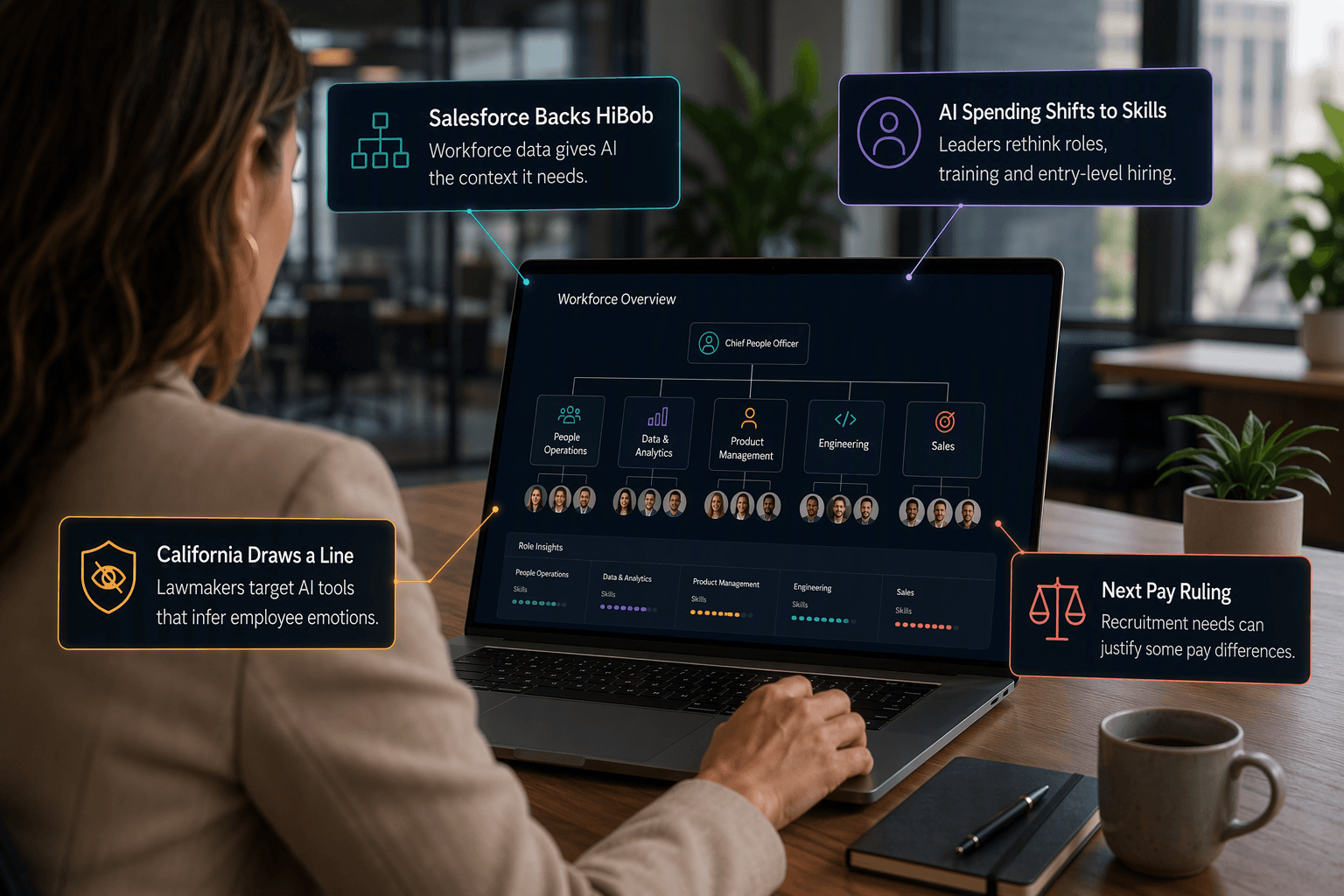
Tools like HiBob and Deel promote people analytics designed for distributed teams — surfacing trends in engagement, collaboration, and workforce health. The win here is not just visibility; it’s earlier intervention.
Some organisations take it further with AI career guidance. For example, IBM has explored AI-driven coaching concepts to support internal mobility and development. The broader lesson: when employees feel supported and “seen” by their systems (and leaders), they’re more likely to stay engaged.