Around the world, countless companies are discovering the benefits of VR in the workplace. Virtual reality isn’t just a novelty for companies anymore. It’s quickly becoming one of the most effective ways to turbocharge productivity, enhance team performance, and drive innovation.
For enterprises, there are two central areas where virtual reality can have an immediate and incredible impact on teams: training and collaboration. In a hybrid and remote work world, studies have shown that VR can bridge the gaps between employees better than any video conferencing or traditional collaboration tool – enabling rapid knowledge sharing and growth.
The report: What does virtual reality and the metaverse mean for training? from PWC has found training employees with virtual reality leads to four times faster outcomes, improved engagement, and increased knowledge retention.
- Want to learn more about the benefits of bringing virtual reality into your workplace? Discover our complete guide to the impact of VR on workplace productivity here.
Here’s your guide to the benefits of VR in the workplace for immersive learning and team-building.
The Top Benefits of VR in the Workplace
We’re constantly discovering new use cases and opportunities for VR in the workplace. Countless reports and case studies have shown that virtual reality technologies can improve employee engagement and performance, minimize stress, and even enhance customer experiences.
VR in the Workplace for Training and Learning
Let’s start with VR's impact on corporate training. Countless companies are using VR onboarding solutions and educational tools today. With virtual reality, students can immerse themselves in “experiential” learning experiences that significantly increase knowledge retention, confidence, and skill development.
One report found that students learning with VR in the workplace take around 30 minutes to pick up the skills that would otherwise take up to two hours to master. Companies can embrace virtual reality headsets and applications for:
- Onboarding processes: Companies like Accenture already use VR in onboarding scenarios, allowing new employees to meet with colleagues remotely and even explore digital twins of office environments before they start work. This immersive onboarding experience can accelerate the integration of new team members into any working environment, preparing them to navigate office spaces and align with teams.
- Soft skill training: Studies from PWC show that virtual reality is highly effective for soft skill training. It can help students develop leadership, communication, and teamwork skills through custom role-playing simulations. Some companies, like Walmart, have even used VR to enhance the emotional intelligence of customer-facing teams.
- Occupational training: Immersive VR training platforms allow employees to practice operating machinery, troubleshooting equipment, and even following crucial safety protocols. Companies like Siemens use VR to train engineers on inspection and maintenance-based tasks, reducing learning times by around 66%.
Unlocking Improved Collaboration
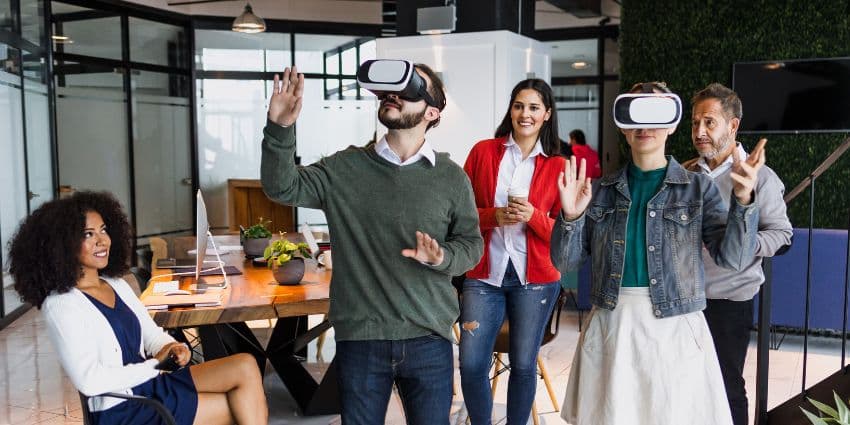
Collaboration is critical to success in any industry – but it’s often difficult for teams to share ideas and connect effectively in a remote or hybrid environment. Although video conferencing and meeting tools can help bridge the gaps between teams, using virtual reality for team collaboration takes things to the next level. VR headsets and intuitive apps like Microsoft Teams’ Immersive Spaces allow employees worldwide to share a virtual space and connect in real-time.
Within these virtual spaces, employees can collaborate on product development processes, experimenting with three-dimensional blueprints and designs. They can also interact in a more “humanized” way, expressing themselves not just through their voice and facial expressions but with specific movements and gestures portrayed by avatars.
According to a report from Meta, one of the current market leaders in the VR landscape, 68% of employees according to Meta believe that virtual reality helps them feel more connected with their teams. As VR solutions become more advanced, integrating AI for real-time translation and transcription and more realistic avatars, the benefits of immersive collaboration will continue to grow.
These days, companies can even create virtual versions of office spaces, using digital twin creation tools like Varjo Teleport to create unique environments for specific teams.