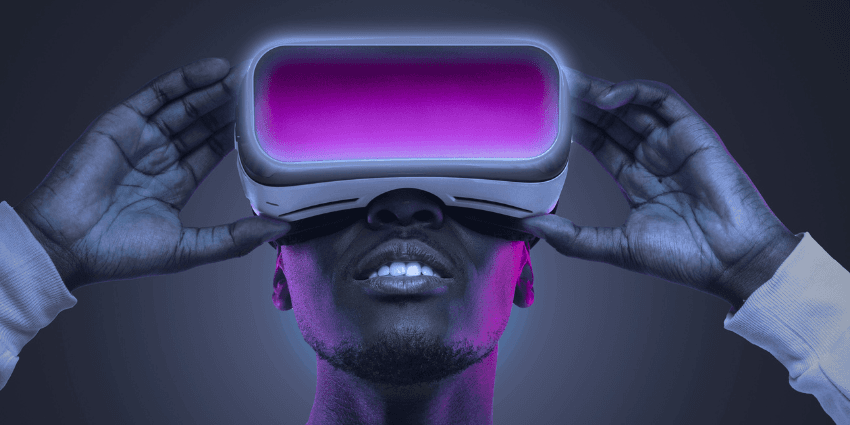
The future of VR looks increasingly promising for enterprise users. Not so long ago, most people viewed virtual reality as a novelty – targeted mainly at consumers and gamers. Now, companies in every industry, from manufacturing to healthcare, are beginning to rely on VR tech.
Right now, the virtual reality market is growing at a CAGR of 28.9% - expected to reach a value of $123.06 billion by 2032. One of the major factors influencing this rapid growth, is ongoing enterprise adoption. Companies are embracing virtual reality to enhance training outcomes, transform hybrid collaboration, streamline product development, and support customers.
However, we’ll still just scratching the surface of what’s possible in virtual reality. If you’re keen to stay on the cutting edge of the industry, here’s what you can expect in the years ahead.
The Future of VR in the Workplace: X Predictions
Based on our discussions with some of the world’s leading XR vendors, and market thought leaders, we’ve identified a few key predictions for the future of VR in business. Here are some of the top workplace VR trends we’re looking forward to in the next five years.
1. VR Hardware Advancements
For years now, major VR vendors have been fine-tuning and improving their headsets, focusing on making VR innovations for enterprises. Apple introduced a new world of opportunities to the VR space with it’s cutting-edge Vision Pro headset – delivering incredible tracking capabilities, and almost unmatched visual fidelity. Other vendors like Pimax are taking a similar approach, producing retina-level displays that go far beyond anything we’ve experienced before.
With innovations in processing chips from companies like Qualcomm, we’re also seeing headsets that deliver more computing power and better performance, even as standalone devices. Plus, there’s a growing focus on comfort and ergonomics in the VR headset market. For instance, companies like BigScreen Beyond and MeganeX are producing headsets a fraction of the size of their predecessors. These headsets aim to tackle the issue of VR fatigue, and enable long-term use of wearable devices.
2. Growth in Software Ecosystems
As the future of VR continues to focus more heavily on the “enterprise” market, demand for robust software ecosystems is growing. Apple demonstrated how problematic a limited app market could be when it initially launched the Vision Pro, and other vendors are now taking steps to avoid the same problem. Meta has expanded its Horizon ecosystem to make it more accessible to developers.
Other organizations, like Google, are working on entirely new software solutions. The Android XR ecosystem, for instance, promises developers immediate access to software kits, AI assistants, and innovative open-source tools to enable rapid development. Beyond that, many companies are even producing dedicated software solutions for enterprise device management, such as Pico with its Pico Business Device Manager system.
3. Expansion in MR and AR Capabilities
Virtual reality is an incredible tool for companies looking to transform training, collaboration, and product development strategies. However, full immersion isn’t ideal for every use case. To make their devices more versatile, many vendors are beginning to implement flexible options for mixed reality and augmented reality into VR headsets.
Most of the top VR devices today feature some type of pass-through capability, whether you’re investing in an affordable solution like the Meta Quest 3S, or the premium Apple Vision Pro. Going forward, many experts sharing VR market predictions believe these features will become more advanced and intuitive. They may even include more spatial computing capabilities, enabling more natural interactions with emerging VR technologies.
4. More Advanced Accessories
VR accessories are nothing new. Companies have long offered buyers access to simple solutions like adjustable head bands, prescription lenses, and light shields. However, innovation in the accessories space is increasing. The future of VR could be marked by an evolution in haptic devices, such as gloves, body suits, and even armbands that boost immersion.
Companies are also experimenting with VR treadmills, and VR shoes, which could transform training experiences and minimize the issues associated with VR sickness. Plus, companies are still exploring options for spatial sound in VR headsets, as well as other custom add-ons. More accessory options could deliver long-term VR benefits for companies, making headsets more versatile and impactful.