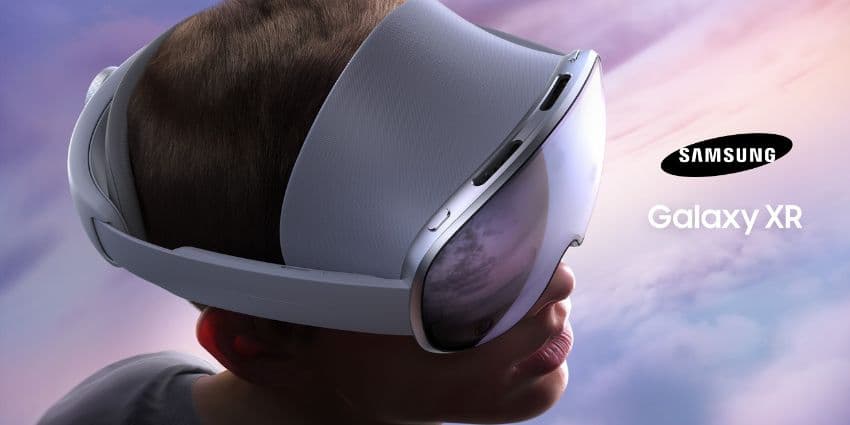
It finally happened. After almost a year of speculation and hints, the Samsung XR headset has arrived, and it’s a big deal for business owners. Built by Samsung, Google, and Qualcomm, this thing runs on Android XR, the same DNA your teams already live in every day, and it’s built to support the enterprise, not just gamers.
The timing couldn’t be better. Hybrid work is messy, travel budgets are tight, and everyone’s chasing that elusive “in-person” energy over video. The Galaxy XR feels like a real fix: meetings that feel spatial instead of flat, AI that understands what you’re looking at, and live translations that keep global teams in sync.
This headset didn’t appear out of nowhere. It’s the product of years of groundwork under Project Moohan, Samsung’s behind-the-scenes push to merge AR, VR, and AI into something practical.
The Galaxy XR at a Glance
The first time you hold the headset, you’re probably going to be reminded of the Apple Vision Pro. It feels and looks premium. Samsung, Google, and Qualcomm clearly wanted a device that could sit comfortably in a workday, not just a demo booth.
Core specifications:
- Displays: Dual 4K Micro-OLED (3,552 × 3,840 per eye), ultra-sharp 4,032 PPI
- Field of view: 109° horizontal × 100° vertical
- Processor: Qualcomm Snapdragon XR2+ Gen 2
- Memory: 16 GB LPDDR5 RAM
- Refresh rate: 72 Hz default / 90 Hz maximum
- Weight: 545 g headset + 302 g external battery
- Battery life: ≈ 2 to 2.5 hours active use
- Audio: Six microphones with spatial sound
- Sensors: Color passthrough cameras, depth sensor, and eye tracking
- Connectivity: Wi-Fi 7, Bluetooth 5.4, USB-C PC Link
- In-box: External battery, light shields, cushions, USB-C cables, lens frame
- Optional: Controllers ($250 MSRP) and Kodak EyeBuyDirect prescription lenses
Ergonomics matter here. The cushioned face seal and tightening dial distribute weight evenly; an underappreciated detail if you’re running two-hour sessions. Top buttons launch the home menu or trigger eye calibration; a side touchpad handles quick controls. It’s subtle, thoughtful engineering, not flash.
At $1,799 USD, the Galaxy XR also undercuts Apple’s Vision Pro by almost half, debuting October 21 in the US and October 22 in Korea. That pricing makes it one of the first “pro” headsets that genuinely fits inside an enterprise technology stack.
Inside the Galaxy XR Software
Hardware may turn heads, but it’s the software that makes the Galaxy XR feel alive. This isn’t a walled garden; it’s an Android XR device built for openness. Samsung, Google, and Qualcomm didn’t reinvent the wheel; they connected it to the cloud.
The headset runs on the new Android XR platform, a version of Android purpose-built for immersive computing. It supports OpenXR, WebXR, and Unity, so enterprise developers can build or port apps without rewriting everything from scratch. That’s a big deal for IT teams that have spent years standardizing on Android hardware.
At the heart of the experience is Gemini AI, Google’s multimodal assistant that sees what you see and hears what you hear.
Samsung called it:
“A powerful platform optimized with AI embedded right from the start.”
- Gemini Live responds through eye contact, voice, or simple hand gestures.
- Circle to Search works in passthrough mode: look at a machine part or product, and the system pulls data instantly.
- Live translation and transcription turn global meetings into natural conversations.
- Auto-spatialization converts flat videos or photos into immersive visuals for training or collaboration.
The workspace itself feels surprisingly practical. You can pin Google Meet on one side, Chrome on the other, Maps or a shared CAD model floating in between. It’s a full “infinite desktop,” complete with keyboard, mouse, and PC Link mirroring for laptops.
More than fifty XR-optimized experiences, from Adobe Project Pulsar to Calm and MLB, also join millions of Android apps that simply work.
The Galaxy XR Headset: Built for Business
For most organizations, the Galaxy XR stands out because it feels like it was made for real work. It isn’t a gadget built for play or a tech demo meant to impress investors. It’s a focused workspace where communication, content, and control all meet in one practical environment.
Start with collaboration. Inside the Galaxy XR workspace, users can open Google Meet, Zoom, Microsoft Teams, or Webex without messy integrations or beta builds. The interface feels intuitive: gesture to open windows, glance to switch between them, and let Gemini AI handle note-taking or translation while you focus on the conversation. Hybrid meetings feel more like shared space than tiled screens.
That functionality is already paying off. Samsung Heavy Industries is using the headset to train engineers through digital shipbuilding simulations, cutting onboarding time and physical training costs. Qualcomm’s Snapdragon Spaces ecosystem adds even more tools for remote support, design review, and digital twin management.
IT leaders aren’t being left behind. The Galaxy XR works within Samsung Knox Manage and Android Enterprise, so admins can handle remote setup, encryption, and monitoring just as they do with phones and tablets. That familiarity matters.