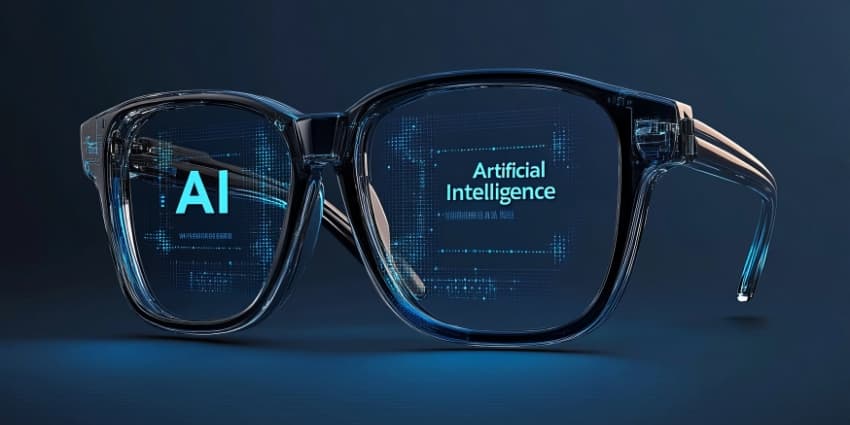
The best smart glasses are moving fast from interesting prototypes to essential workplace tools. Across sectors, business leaders are finding that wearable displays and AI smart glasses can do what phones and laptops can’t: keep people connected, informed, and hands-free while they work.
Some analysts say the XR market will be worth more than $1,067 billion by 2030, and a big part of that growth comes from rising enterprise interest.
Frontline teams are using augmented reality glasses to access remote support and digital overlays without stopping the job. Field technicians, logistics operators, and hybrid workers are saving minutes on every task. In some industries, smart specs are even bridging global communication gaps.
As AI and spatial computing merge, the newest devices are blending real-time information, voice interaction, and visual context into one experience.
Why the Best Smart Glasses Matter for Businesses
Most digital tools still pull people away from their work. Smart glasses do the opposite. They keep teams focused while bringing communication, data, and guidance into their line of sight.
Companies are starting to see what that means in practice. Field engineers can call up live support without reaching for a phone. Service technicians can capture and share what they see as they work. Office teams use AR smart glasses to visualize projects or connect to hybrid meetings more naturally.
Companies like DHL have already reported a 25 percent jump in warehouse picking efficiency after rolling out augmented reality glasses that display task lists directly in view. Similar projects in manufacturing and healthcare have cut training time and reduced mistakes.
The best smart glasses this year aren’t experiments. They are practical devices that remove friction from everyday tasks and help teams communicate more clearly, wherever they are.
How We Chose the Best Smart Glasses for Enterprises
There’s no shortage of wearables calling themselves the best smart glasses right now. Some are impressive on paper but awkward in practice. Others look simple and end up being the ones people actually use. The real measure is how well they fit the way people already work.
We looked at:
- Compatibility: The glasses need to connect without friction to Windows, Android, and the collaboration tools most offices already rely on.
- Performance: Audio and video have to stay clear when things get loud, whether that’s heavy equipment running nearby or a busy job site full of chatter.
- Battery and comfort: If a headset starts feeling awkward or dies before the shift wraps up, it’s going to end up in a drawer.
- Security and management: IT managers need control over updates, permissions, and data access, without adding another layer of admin work.
- Value: The tech has to earn its place. That could mean faster training, fewer mistakes, or a smoother workflow.
Each business will have a different balance to strike. A technician might need rugged AR smart glasses that can survive a job site. A sales or support team might get more from voice-first glasses that handle calls and notes on the move. What counts is whether the device makes work easier.
The Best Smart Glasses in 2025: Our Top Picks
Ready to take the leap into a new age of wearable technology? Here are the best smart glasses we recommend exploring this year, and a quick insight into what makes them so impressive.
Meta Ray-Ban (Gen 2)
The latest Ray-Ban Meta Gen 2 glasses bring a practical dose of AI into everyday work. They keep the familiar design but hide serious hardware inside: a 12-megapixel ultra-wide camera that records sharp video, upgraded five-microphone array for clearer calls, and Meta’s newest on-device assistant. Typical use lasts close to eight hours, with a charging case for quick top-ups through the day.
For mobile professionals, the appeal is obvious. Field engineers can stream what they’re seeing to remote experts. Sales teams can capture site images hands-free. Managers can record notes, take calls, and share clips without touching a phone. Because they look like standard eyewear, adoption in client-facing roles is easy with no heavy headset or obvious tech barrier.
More than a million pairs of Meta’s smart glasses have already been sold, proof that the idea has moved beyond early trials. The second-generation model fits firmly into the AI smart glasses category rather than full AR smart glasses. It doesn’t project digital overlays but focuses on voice control, image capture, and instant sharing within existing workflows.
Pros
- Comfortable, stylish design that blends in anywhere
- 12MP camera with sharp 3K video for clear documentation
- Excellent voice control and AI assistant features
- Good battery life with fast top-up via case
- Seamless hands-free use for calls, photos, and live sharing
Cons
- Lacks visual AR overlay
- Battery drains faster with video streaming
- Privacy and data management can be tricky for enterprises
XREAL One Pro
The XREAL One Pro feels like a pair of AR smart glasses that actually belong in a workday. The image quality is sharp and bright, thanks to Sony’s new Micro-OLED panels and a 57-degree field of view that gives you space to focus. Plug them into a laptop or phone and you’ve got an instant private screen.
Teams in design and engineering have been quick to pick them up because they can pull up blueprints or walk through digital models side by side. The glasses are light, fold up easily, and don’t draw attention in an office. They’re still wired, which isn’t perfect, but that tether delivers steady visuals that wireless models struggle to match.
These glasses are still rolling out right now, but they’re perfectly positioned to become some of the best smart glasses for enterprise teams.
Pros
- Bright, high-quality Sony Micro-OLED display
- Easy plug-and-play setup with phones and laptops
- Ideal for design, architecture, and collaboration tasks
- Lightweight, foldable, and comfortable to wear
- Consistent performance with a reliable tethered connection
Cons
- Still wired, limiting mobility
- Lacks full enterprise software support
- Higher price point than entry-level AR options
RayNeo Air 3s Pro
The RayNeo Air 3s Pro is the kind of device teams can easily end up using every day. The display is bright (about 1,200 nits) and smooth at 120 Hz. Hook it up to a phone or laptop and you’ve got a 130-inch personal workspace that fits in a pocket.
For trainers, presenters, or anyone on the move, it’s a great way to stay productive without lugging extra gear around. The glasses are light, easy to wear, and noticeably gentle on the eyes thanks to TUV-certified low-blue-light lenses.
They’re not packed with enterprise features or complex overlays, but that’s the point. The Air 3s Pro gives you the core benefits of AR smart glasses: comfort, clarity, and privacy, without the bulk or the price tag. It’s an easy way for teams to experiment with immersive work tools before committing to a full rollout.
Pros
- Extremely bright (1,200 nits) and smooth 120Hz visuals
- Portable 130-inch display effect, great for travel and training
- Lightweight and comfortable for long use
- Low blue light lenses reduce strain
- Affordable entry into AR displays for teams testing the tech
Cons