Smart glasses have been “the next big thing” for almost a decade, and Meta has clearly been leading the way for most teams. The Meta Ray-Bans are some of the most popular smart specs in the industry, but up until recently, they lacked something valuable: a built-in display.
Now, the new Meta Ray Ban Display glasses have officially arrived. They went on sale in the United States on September 30, while customers in the United Kingdom, France, Italy, and Canada will have to wait until 2026.
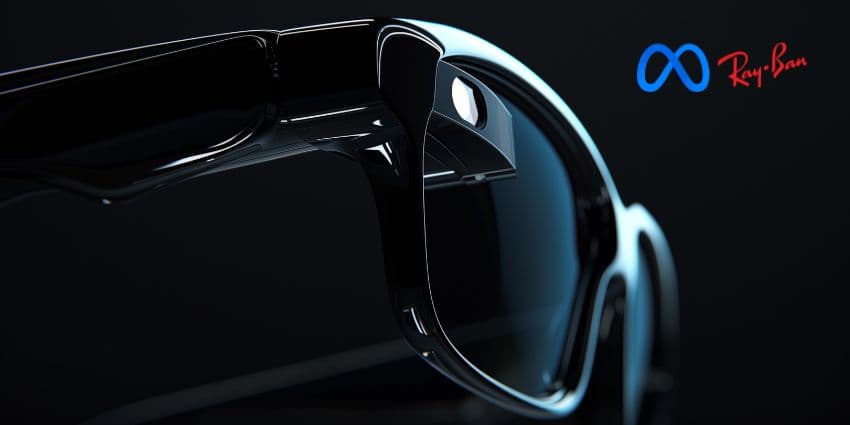
For many people, the wait will be worthwhile. The Display model introduces a new approach to smart eyewear. It looks and feels like a familiar pair of Ray-Bans but carries much more behind the lens. A micro-LED display sits quietly inside, projecting captions, directions, messages, or even a live video call straight into view. For business leaders looking for faster communication and smoother collaboration, this might be the moment smart glasses finally become part of real workplace strategy.
What the Meta Ray-Ban Display Glasses Can Do
At first glance, the Meta Ray Ban Display looks like any other pair of Ray-Bans. You wouldn’t guess there’s tech inside at all, which is exactly why people notice them. They feel familiar, not futuristic.
Look closer and a small screen comes to life inside the lens. It’s a micro-LED panel with clear detail and surprising brightness; sharp even when sunlight hits it straight on. The field of view is small enough to stay discreet but wide enough to read what matters. A quick glance can show directions to a meeting, captions during a video call, or a short message from your team.
The glasses are priced at about $799, a figure that also covers the Neural Band. The slim wrist strap reads tiny muscle movements, letting you control the display or take photos without actually touching the frames. It runs through most of a workday on a single charge and shrugs off water or light rain without issue.
In daily use, the performance feels steady and dependable. The glasses themselves last around six hours, while the folding case adds another thirty. A 12-megapixel wide camera records video in 1440p at 30 frames per second, which is more than enough for remote support calls or quick field documentation. At roughly seventy grams, the frames are light and comfortable, though by the end of a long day you’ll know they’re there.
What makes the Meta Ray Ban range stand out isn’t just the hardware. It’s the way Meta’s software turns them into a working tool. Voice translation, live navigation, and instant messaging all run smoothly. Accessibility options are already built in, too, such as screen-reader and magnification support, plus prescription lenses from −4.00 to +4.00, making the glasses usable across diverse teams.
For those in sport or field operations, the Oakley Meta Vanguard joined the line-up on October 21 too, at £499, pushing the brand deeper into task-specific wearables. Plus, with Gen 3 rumors pointing to better battery and on-device AI, it’s clear this isn’t a one-off experiment; it’s the beginning of Meta’s wearable ecosystem.
Business Use Cases for the Meta Ray Ban Display Glasses
Ask any professional what slows them down and you’ll often hear the same thing: too many screens. Eyes bounce from laptop to phone to tablet and back again. The Meta Ray Ban Display breaks that cycle.
Picture a worker standing in a warehouse with both hands full as a shipment update appears right in front of their eyes. No juggling screens, no hunting for a device. Or imagine a field engineer streaming what they see to a remote expert while staying focused on the equipment. That’s where the Meta AR Glasses shine. They make collaboration feel effortless, like a conversation instead of another app to manage.
Hybrid teams will see the benefit instantly. A manager walking between departments can glance at translated comments, meeting captions, or quick messages without breaking stride.
The real strength of the Meta Ray Ban design lies in how naturally it fits into daily communication. A short voice command can bring up captions from a Teams or Zoom meeting, send a note through WhatsApp or Messenger, or capture a quick video update for coworkers. The Neural Band worn around the wrist reads subtle finger movements to accept or dismiss alerts. No tapping on a screen, no switching between devices, only steady, uninterrupted work.
Enterprise leaders are clearly starting to see the value. Counterpoint Research reported that global smart-glasses shipments jumped 110 percent in the first half of 2025, with Meta capturing about 70 percent of the market. That kind of momentum doesn’t come from curiosity alone; it’s being fuelled by real enterprise pilots in logistics, healthcare, construction, and remote field service.
What companies are learning is simple: when workers aren’t constantly switching devices, they stay in the moment. They react faster, communicate more clearly, and cut small delays that add up over time. The Meta Ray Ban Display glasses don’t just promise hands-free communication; they deliver heads-up focus.