Every few years, Silicon Valley announces the death of the desk. The laptop was supposed to free us. Then the smartphone, then the Metaverse. Now, with the breathless confidence that only the technology industry can sustain across decades of partially delivered promises, it is AI glasses' turn.
Both Meta and Snap have recently unveiled significant advances in AI-powered eyewear that integrate calendar tools, real-time translation, augmented-reality displays, and context-aware AI into wearable frames. The pitch to enterprise technology leaders is seductive, but the question of whether these tools offer genuine productivity benefits remains unanswered.
What Are Meta and Snap Announcing?
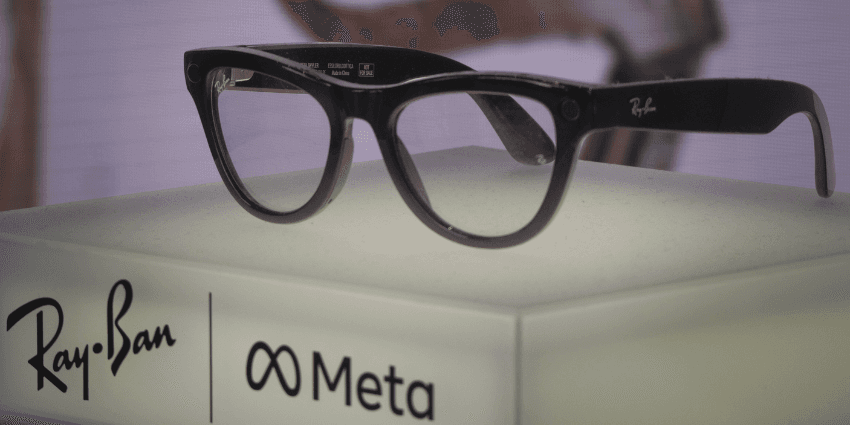
Meta's latest update to its Ray-Ban Meta line leads, somewhat revealingly, with a much-needed aesthetic refresh: new frames, new colorways, and prescription compatibility. These glasses are packed with new productivity features, such as native Google Calendar and Outlook integration, glanceable widgets, Neural Handwriting for silent message replies, and live translation expanding to 20 languages, including Mandarin, Korean, and Arabic.
Snap's SPECS glasses, unveiled at Augmented World Expo 2026, are more ambitious. Fully standalone, tether-free, with a proprietary AR display boasting a 51-degree field of view - equivalent, Snap claims, to a 24-inch desktop monitor or a 115-inch screen at ten feet. SPECS are designed to replace screen time outright, albeit by placing the screen an inch from your eyeball. Users can cast screens, open virtual whiteboards, and collaborate remotely from any environment. Agentic Lens development is also supported via Claude Code, Codex, and Cursor, opening the door to enterprise-built AR applications.
On paper, it is impressive. But when the practicalities are considered, the questions multiply quickly.
Will AI Glasses Replace the Traditional Desk Setup?
Not for a while…
The concept of ambient computing - AI and display technology that lives invisibly in the physical world, surfacing information precisely when needed - is a compelling one. Snap's contextual AI that "sees what you see" and connects real-time guidance to real-world objects is, at least in controlled demos, genuinely impressive. For mobile-first industries, AR directions, digital measuring tools, and on-site educational overlays have clear, demonstrable value.
But the jump from flashy demos to real-world applications has been historically difficult for the augmented reality industry. Smart glasses have been here before. Google Glass (remember them?) launched in 2013 to considerable fanfare, then retreated from public life within two years.
Microsoft's HoloLens, after years of enterprise pilots and considerable investment, was quietly wound down in 2023. The hardware may be better this time, but the graveyard of augmented reality devices that failed to live up to their promises should make enterprise buyers pause before they start planning a desk-free office.
What Does This Mean for Collaboration and Communication at Work?
The collaboration features are the strongest in the near term. Meta's WhatsApp message summaries and recall, which allow users to request condensed group chat briefings on demand, are a genuinely useful tool for distributed teams. Neural Handwriting - replying to messages silently by tracing letters on any surface - has obvious appeal in meeting-heavy environments.
For contact center and CX professionals managing simultaneous communication threads, the ability to compose responses without visibly breaking attention is worth examining seriously.
Snap's developer ecosystem is the more forward-looking play. Its Native Development Kit and SPECS Spatial Benchmark invite enterprises to build bespoke AR workflows - compliance overlays, training guides, step-by-step technical instructions layered over physical equipment. The agentic integrations with Claude Code and Cursor lower the barrier considerably for IT teams with development capacity.
The caveat: development capacity is doing a lot of work in that sentence. Most enterprise IT departments are already stretched. Building custom AR Lenses is not a weekend project, and Snap's ecosystem, however promising, is brand new.
How Much Will Enterprise AI Glasses Cost - and Is the ROI There?
The price point will be a difficult hurdle for many to overcome. Meta's Ray-Ban Optics line starts at $499, whereas Snap’s SPECS land at a lofty $2195, with a $200 refundable deposit. At that price, they will struggle to survive contact with procurement, finance, and a legal team increasingly alert to the data implications of always-on AI devices.