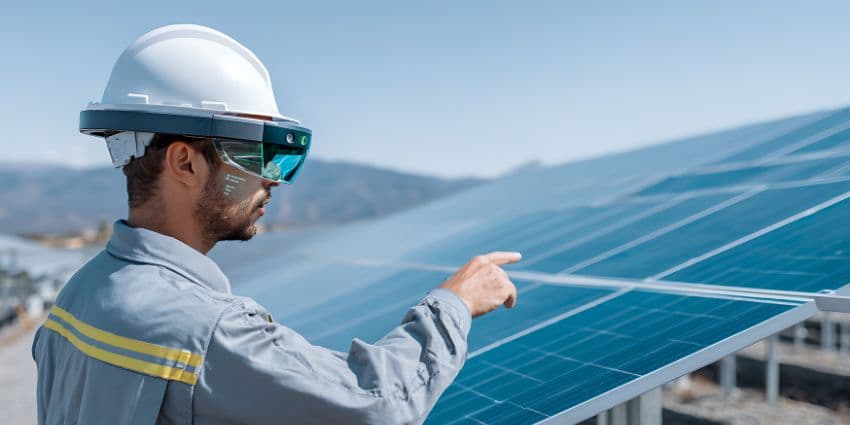
If you’re looking for a way to upgrade the productivity and performance of your field workers, the top AR smart glasses case studies offer an incredible insights into the benefits of immersive technology. Augmented reality is unlocking incredible opportunities in every industry, particularly as smart glasses become more sophisticated, intelligent, and intuitive.
Our proprietary research found that while there are challenges to adopting extended reality tech, companies are achieving incredible results with AR, MR, and VR. Forward-thinking organizations say XR enhances training, collaboration, productivity, customer experience, and team engagement.
- Ready to embrace the future of field service? Find our complete guide to the potential of AR glasses in field services here. Alternatively, discover ways to optimize your return on investment with our guides on choosing the right AR smart glasses, and implementing AR into your workflows.
Ready to be inspired? Here, we’ll introduce you to some of the most impressive success stories from companies across industries, using augmented reality to empower and support their teams.
Inspirational AR Smart Glasses Case Studies
Notably, while there are now dozens of technology vendors creating augmented reality solutions specifically tuned to the needs of field workers and enterprises – they don’t all share success stories. These are just some of the top AR smart glasses case studies we’ve discovered – but it’s worth doing your own research (and checking out our other reports) for additional insights.
Optimizing Audits in Manufacturing: Clorox and Vuzix
Struggling with the repercussions of pandemic-induced travel restrictions, the Clorox company needed an intuitive way to complete mandatory plant audits, train teams, and gather data from numerous locations. The firm turned to Vuzix, one of the world leaders in immersive technology, and purchased a series of Vuzix M400 smart glasses for their team members.
Flexible, durable, and tuned to the needs of industrial workers, these wearables allowed employees to conduct audits with real-time, remote expert guidance. In no time, teams performed audits in one-tenth of the time they previously took, saving Clorox approximately $949 per person.
At the same time, machinery downtime was reduced by a massive 20%, while Clorox minimized the exposure team members had to health and safety risks. AR smart glasses case studies like this demonstrate how immersive technologies can make teams faster, more efficient, and more capable in their roles – even when they’re dealing with complex restrictions.
Streamlining Utilities Maintenance: RealWear and TotalEnergies
One of the most impressive AR smart glasses case studies taken from the energy sector comes from “TotalEnergies” – a global company active in more than 130 countries. The firm was facing significant hurdles in maintaining intricate refinery equipment, with routine maintenance leading to significant downtime and high operational costs.
TotalEnergies invested in RealWear’s HMT-1Z1 headsets, combined with Microsoft Teams, to upgrade their maintenance workflow. These ruggedized devices gave workers hands-free access to schematics, step-by-step instructions, and live communication with experts.
According to the team, embracing augmented reality allowed them to significantly streamline diagnostic processes, enhance team collaboration, and strengthen safety in hazardous environments. Plus, because the headsets reduced the need for travel, TotalEnergies was able to cut its CO2 emissions significantly, adhering to evolving ESG initiatives.
Saving Lives Anywhere: Chi Mei Medical Center and Vuzix
Numerous AR smart glasses case studies have emerged in recent years demonstrating the impact immersive tools can have on field-based employees and paramedics. For instance, Taiwan’s Chi Mei Medical Center leverages M400 smart glasses not just in emergency rooms and intensive care units to transform patient care – but also on the field to give first responders instant access to experts.
In the field, responders can share what they see—from patient conditions to insights into potential injuries—with doctors and surgeons in real time. These professionals can ask questions, view monitors, and even get step-by-step guidance on completing procedures.